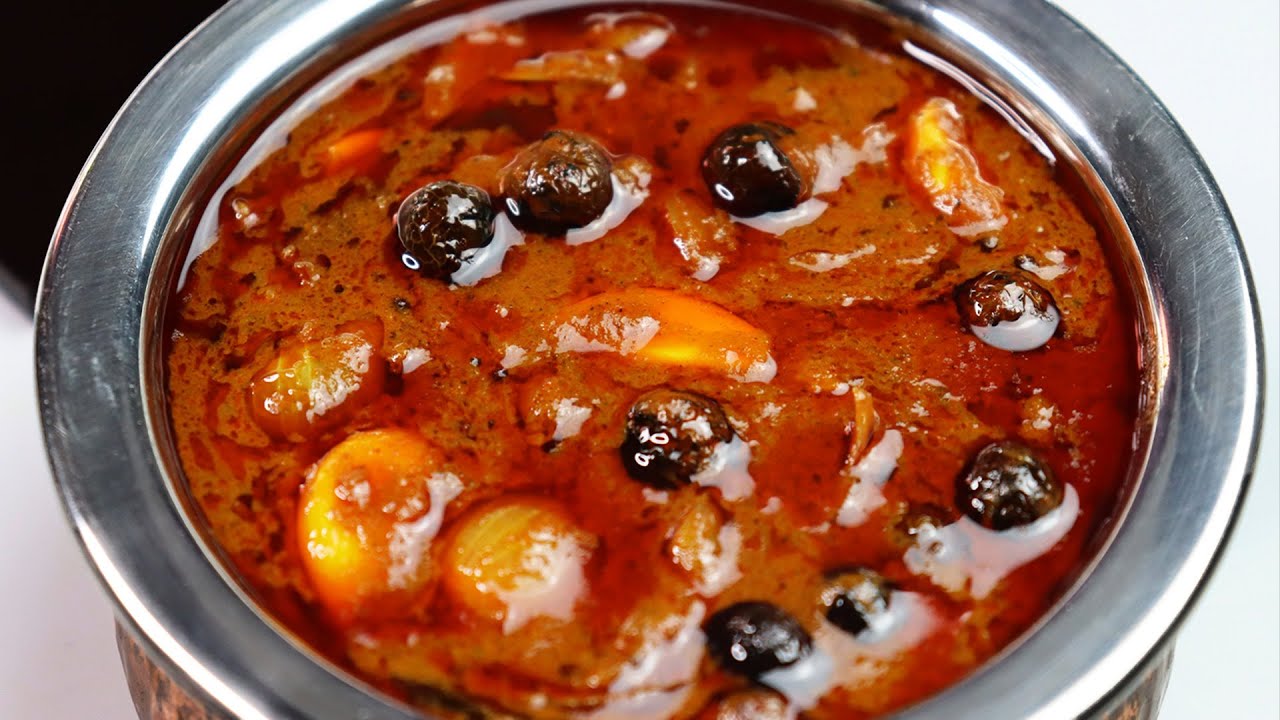
Curry Leaves Kulambu – Karivepilai Kuzhambu

Authentic South Indian Food Creator · Home Chef

Rate this recipe
Curry Leaves Kulambu, known in Tamil as Karivepilai Kuzhambu, is a bold, tangy, and deeply aromatic tamarind-based gravy that holds a proud place in the heart of traditional Tamil Nadu cuisine. Unlike most kulambu varieties that use curry leaves merely as a seasoning, this recipe elevates them to the starring role, celebrating their medicinal potency and intense fragrance in every spoonful. Rooted in the ancient culinary wisdom of South India, this kuzhambu belongs to the family of thick, spiced gravies that Tamil households have been simmering on wood-fire stoves for generations. It is a dish born out of simplicity, resourcefulness, and the deep understanding that every ingredient from a Tamil kitchen garden holds flavour, nutrition, and healing properties worth honouring.
Tamil families have a special love for this kulambu because it carries both taste and tradition in equal measure. Grandmothers and mothers across Tamil Nadu swear by curry leaves as a natural remedy for digestion, hair health, and overall wellness — and incorporating them into a rich, slow-cooked kulambu is their delicious way of ensuring the family benefits from this superfood. This kuzhambu is especially popular during weekday lunch meals, served steaming hot over plain white rice with a side of appalam or papad. It is also prepared during auspicious occasions, simple home festivals, and whenever someone in the household is recovering from illness and needs wholesome, comforting food. The beauty of this recipe is that it requires no vegetables and no tomatoes, making it a pantry-friendly dish you can cook any day of the week.
What makes this particular Karivepilai Kuzhambu recipe so special and beginner-friendly is its straightforward method and the use of everyday South Indian pantry staples. The recipe calls for freshly roasted and ground curry leaves combined with the warmth of kulambu milagai thool, the tang of tamarind, and the sweetness of pearl onions and garlic — all brought together in sesame oil for that unmistakable Chettinad-inspired depth. It can be stored for up to a week in the refrigerator, making it a wonderful make-ahead kulambu for busy Tamil families. Whether you are a seasoned South Indian cook or a beginner trying your first kuzhambu at home, this recipe will walk you through every step with ease and confidence.
Looking for more curry recipes? Browse all vegetarian recipes →
Ingredients(15 items)
Instructions
💡 Tap a step to mark it doneSoak the tamarind in 1 cup of warm water for 15 minutes. Once softened, squeeze it thoroughly with your hands to extract all the pulp. Strain the tamarind water through a fine sieve and discard the fibrous residue. Set the tamarind extract aside. This forms the tangy base of your kulambu.
Wash the fresh curry leaves thoroughly and spread them on a clean kitchen towel to remove all moisture. Pat them dry completely — any dampness will cause the leaves to splatter when added to the hot pan. Dry roasting works best with moisture-free leaves.
Heat a dry pan (no oil) over medium flame. Add the cleaned and dried curry leaves to the pan. Dry roast them, stirring continuously, for 3 to 4 minutes until they become crisp, aromatic, and slightly darkened. Be careful not to burn them. Remove from the pan and allow them to cool completely.
Once the roasted curry leaves are cool, transfer them to a mixer grinder and grind them into a fine, smooth powder. You may add a tablespoon of water if needed to make a coarse paste instead. Set this aside — this is the heart and soul of your Karivepilai Kuzhambu.
Heat sesame oil in a heavy-bottomed kadai or pan over medium flame. Once the oil is hot, add mustard seeds and allow them to splutter completely. Then add the cumin seeds, dried red chillies, and a generous pinch of asafoetida. Sauté for 30 seconds until fragrant.
Add the peeled pearl onions and garlic cloves to the pan. Sauté over medium flame for 6 to 8 minutes, stirring occasionally, until the onions turn golden brown and slightly caramelised. The natural sweetness of the pearl onions is key to balancing the tanginess of the tamarind.
Reduce the flame to low. Add turmeric powder, coriander powder, and kulambu milagai thool to the sautéed onions and garlic. Mix everything well and cook the spices for 2 minutes, stirring constantly, so the raw smell of the powders disappears and they bloom in the sesame oil.
Pour the tamarind extract into the pan. Add an additional ½ cup of water. Stir everything well to combine and bring the mixture to a boil over medium-high flame. Once it starts bubbling, reduce the heat and let it simmer for 8 to 10 minutes so the raw tamarind smell cooks off and the kulambu begins to thicken.
Add the ground curry leaf powder (or paste) to the simmering kulambu. Stir well to incorporate it fully into the gravy. Add salt to taste. If you find the kulambu too tangy, add a small piece of jaggery to balance the flavours. Mix gently and continue to simmer.
Let the kulambu cook on a low to medium flame for another 8 to 10 minutes, stirring occasionally. The gravy should thicken to a semi-thick consistency — not too watery and not too dry. The oil will begin to separate and float on top, which is a sign that the kulambu is perfectly cooked. Taste and adjust salt before turning off the flame. Serve hot with white rice and appalam.
Tips and Tricks
- Use only fresh, tender curry leaves for the best flavour and colour. Old or yellowing leaves will give a bitter taste to the kulambu.
- Sesame oil (nallennai) is non-negotiable in this recipe — it adds the authentic South Indian depth and aroma that makes this kulambu truly special. Do not substitute with refined oil.
- This kulambu stores well at room temperature for up to 2 days and in the refrigerator for up to a week. The flavour actually deepens and improves the next day, making it an excellent make-ahead dish.
- For a richer, thicker kulambu, dry roast a tablespoon of urad dal (ulundu) and a teaspoon of black pepper (milagu) along with the curry leaves and grind them together.
- Do not skip the asafoetida — it aids digestion and is a traditional balancing spice in all tamarind-based kuzhambu varieties.
Related Tags