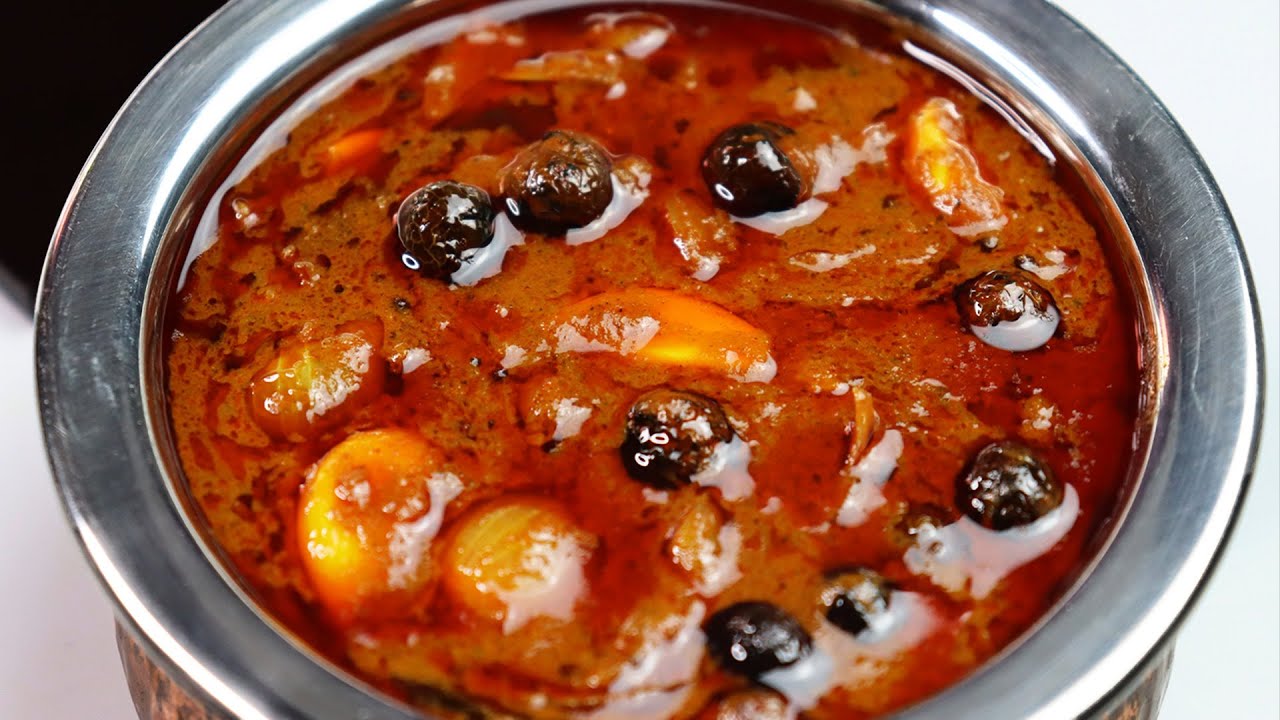
Egg Kulambu | South Indian Egg Kuzhambu

Authentic South Indian Food Creator · Home Chef

Rate this recipe
Egg Kulambu, known as Muttai Kuzhambu in Tamil, is a classic South Indian curry that holds a very special place in Tamil home cooking. This rich, tangy, and spicy gravy is made with hard-boiled eggs simmered in a tamarind-based masala sauce, layered with the bold flavors of onion, tomato, freshly ground spices, and coconut. Rooted deeply in Tamil culinary tradition, this dish reflects the heart and soul of everyday cooking across Tamil Nadu, bringing warmth and comfort to every dining table it graces.
Tamil families absolutely adore Egg Kulambu because it is one of those fuss-free, deeply satisfying meals that can be made on any day of the week. Whether it is a busy weeknight dinner, a relaxed Sunday lunch, or even a simple celebration at home, this kuzhambu fits every occasion beautifully. Many Tamil households prepare this dish as a go-to non-vegetarian curry when time is short but flavor cannot be compromised. Paired with hot steamed rice or soft idiyappam, it brings the whole family together around the table with joy and appetite.
What makes this Egg Kulambu truly special is its beautiful balance of tanginess from tamarind, heat from red chilies, and a subtle sweetness from sautéed onions and coconut paste. The secret to the best results lies in slow-cooking the masala until the oil separates, which deepens the flavor remarkably. Using freshly ground coconut paste gives the gravy a naturally creamy, luscious texture without any artificial thickeners. This recipe is beginner-friendly yet tastes like it came straight from an experienced Tamil grandmother's kitchen.
Looking for more curry recipes? Browse all recipes →
Ingredients(18 items)
Instructions
💡 Tap a step to mark it doneSoak the tamarind in 1 cup of warm water for 10 minutes. Once softened, squeeze the tamarind thoroughly with your fingers to extract all the pulp. Strain the liquid through a fine sieve, discard the fibrous residue, and set the tamarind water aside. This tamarind extract forms the tangy base of your kulambu.
Grind the fresh grated coconut with 3 tablespoons of water in a small blender until you get a smooth, thick coconut paste. Set this aside. This coconut paste will be added toward the end of cooking to give the gravy its signature creamy and rich texture.
Gently score each hard-boiled egg by making 2 to 3 shallow cuts along the sides using a knife. This helps the eggs absorb the flavors of the gravy deeply while simmering. You can also lightly shallow-fry the boiled eggs in a teaspoon of oil with a pinch of turmeric and chili powder for a golden exterior and extra flavor before adding to the gravy.
Heat 3 tablespoons of oil in a heavy-bottomed kadai or pan over medium heat. Once the oil is hot, add the mustard seeds and let them splutter. Then add the dry red chilies and curry leaves and fry for about 20 seconds until fragrant. This tempering forms the aromatic foundation of the kulambu.
Add the finely chopped onions to the pan and sauté over medium heat, stirring frequently, for about 8 to 10 minutes until the onions turn golden brown. Take your time with this step as properly browned onions are the secret to a deep, rich-tasting kulambu. Do not rush this process.
Add the ginger garlic paste to the browned onions and sauté for 2 to 3 minutes until the raw smell completely disappears and the paste turns slightly golden. Stir continuously to prevent it from sticking to the bottom of the pan.
Add the finely chopped tomatoes and cook on medium heat for 5 to 6 minutes, stirring occasionally, until the tomatoes turn completely soft and mushy and the oil begins to separate from the sides of the mixture. The masala should come together as a thick, unified paste at this stage.
Lower the heat to medium-low and add the turmeric powder, red chili powder, coriander powder, black pepper powder, and salt. Mix everything together well and cook the spice powders into the masala for 2 minutes, stirring continuously, until the raw spice smell cooks off and the oil separates clearly from the masala.
Pour the extracted tamarind water into the masala and stir well to combine. Increase the heat to medium and bring the mixture to a boil. Let it boil for 5 minutes, stirring occasionally. The tamarind will cook into the masala and the raw sour smell will mellow out into a pleasant tang.
Add the ground coconut paste to the simmering gravy and stir it in well. Let the kulambu simmer on low to medium heat for 3 to 4 minutes until the coconut is fully cooked into the gravy and the sauce thickens to a slightly creamy consistency. Taste and adjust salt and chili powder if needed.
Gently slide the scored hard-boiled eggs into the simmering kulambu. Spoon the gravy over the eggs and let everything simmer together on low heat for 5 minutes so the eggs absorb all the beautiful flavors of the kulambu. Do not stir too vigorously at this stage to keep the eggs intact.
Turn off the heat and garnish the Egg Kulambu generously with freshly chopped coriander leaves. Let the kulambu rest for 5 minutes before serving. This resting time allows the flavors to meld together even more. Serve hot with steamed rice, chapati, idiyappam, or dosa for a truly satisfying Tamil meal.
Tips and Tricks
- Always sauté the onions until they are properly golden brown and never just translucent — this deep caramelization is what gives the kulambu its rich, restaurant-style depth of flavor that makes it truly unforgettable.
- Lightly frying the boiled eggs in a teaspoon of oil with a pinch of turmeric and chili powder before adding them to the gravy gives them a beautiful golden crust that not only looks appealing but also adds a wonderful texture to every bite.
- For the best consistency, add the tamarind extract gradually and adjust based on your preferred tanginess level. If the gravy becomes too thick after simmering, add a small splash of water and gently stir to loosen it to your desired texture.
Related Tags