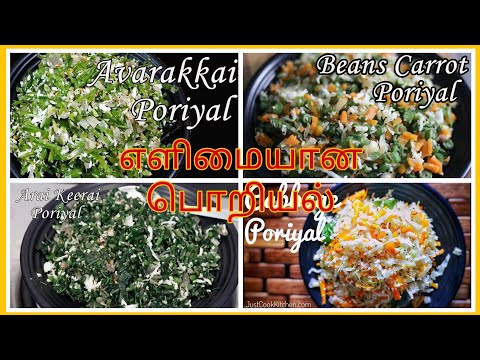
Four Healthy Poriyal Recipes: Beans, Banana Stem, Keerai & Cauliflower

Authentic South Indian Food Creator · Home Chef

Rate this recipe
Poriyal is the heart and soul of a traditional Tamil Nadu thali. These simple stir-fried vegetable side dishes have been a cornerstone of South Indian home cooking for generations. Whether it is crispy french beans, tender banana stem, iron-rich keerai, or golden cauliflower, each poriyal is prepared with a fragrant tempering of mustard seeds, curry leaves, and freshly grated coconut that brings out the natural goodness of every vegetable. Poriyal is not just food — it is a comforting ritual passed down through Tamil kitchens.
Tamil families swear by poriyal as the perfect accompaniment to their daily rice and kuzhambu meals. On busy weekdays, a simple beans or keerai poriyal alongside steaming hot vathal kuzhambu or kaara kuzhambu makes the most satisfying and wholesome lunch. During festive occasions like Pongal, Karthigai Deepam, or temple festival sadis, a spread of colourful poriyals always graces the banana leaf. The variety of textures and flavours makes every bite of rice special, and no Tamil meal ever feels complete without at least one poriyal on the plate.
What makes these four poriyals truly special is how nutritious and easy they are to make at home. French beans support digestion, banana stem cleanses the kidneys, ponnanganni keerai is rich in iron, and cauliflower is packed with antioxidants. Each poriyal follows the same simple cooking method, making it beginner-friendly. The secret to a great poriyal is not overcooking the vegetables — keep them slightly firm, finish with fresh coconut, and serve hot. These recipes are perfect for anyone learning Tamil home cooking.
Looking for more lunch recipes? Browse all vegetarian recipes →
Ingredients(17 items)
Instructions
💡 Tap a step to mark it doneFRENCH BEANS PORIYAL — Wash and finely chop 200 grams of fresh french beans into small pieces about half a centimetre thick. Set aside. Heat 2 tablespoons of oil in a kadai over medium flame. Add 1 teaspoon mustard seeds and wait for them to splutter fully before adding 1 teaspoon urad dal and 1 teaspoon chana dal. Fry until they turn golden brown.
Add 2 dried red chillies, a sprig of curry leaves, and a pinch of asafoetida to the kadai. Fry for a few seconds until fragrant. Add 1 finely chopped onion and 1 slit green chilli. Sauté until the onion turns soft and translucent, about 3 minutes. Add 1/4 teaspoon turmeric powder and stir well.
Add the chopped french beans to the kadai along with salt to taste. Mix everything well so the beans are coated with the tempering. Sprinkle 2 to 3 tablespoons of water, cover with a lid, and cook on low to medium flame for 7 to 8 minutes, stirring occasionally, until the beans are cooked through but still have a slight bite. Remove the lid and cook off any remaining moisture. Finish with 2 tablespoons of freshly grated coconut, stir well, and serve hot.
BANANA STEM PORIYAL — Peel the outer fibrous layers of the banana stem and chop the inner tender portion into small roundels. Remove the fibrous threads as you chop. Immediately place the chopped pieces into a bowl of water mixed with a little buttermilk or curd to prevent browning and reduce bitterness. Drain before cooking.
Heat 2 tablespoons of oil in a clean kadai. Add mustard seeds, urad dal, chana dal, and let them splutter and turn golden. Add dried red chillies, curry leaves, and asafoetida. Add chopped onion and green chilli and sauté until onion softens. Add turmeric powder and the drained banana stem pieces. Mix well, add salt, sprinkle a little water, cover and cook for 8 to 10 minutes on low flame until the banana stem becomes tender. Stir in grated coconut, mix, and serve.
KEERAI PORIYAL — Clean the ponnanganni keerai or your choice of greens thoroughly by washing multiple times in water to remove any grit. Roughly chop the leaves and tender stems. Heat oil in a kadai, add mustard seeds, urad dal, and chana dal. Let them crackle and brown. Add red chillies, curry leaves, asafoetida, chopped onion, and green chilli. Sauté until onion is soft.
Add the cleaned keerai to the pan along with turmeric powder and salt. The greens will release water as they cook. Stir well and cook on medium flame without adding any extra water. Greens wilt down significantly in volume. Cook for 5 to 6 minutes, stirring frequently, until all the moisture has evaporated and the keerai is fully cooked. Do not overcook — the greens should stay bright green. Add grated coconut, mix well, and remove from flame.
CAULIFLOWER PORIYAL — Cut the cauliflower into small uniform florets. Soak them in warm salted water for 10 minutes to clean thoroughly, then drain and set aside. Heat oil in a kadai over medium flame. Add mustard seeds, urad dal, chana dal, and fry until golden. Add dried red chillies, curry leaves, asafoetida, chopped onion, and green chilli. Sauté the onion until it turns light golden.
Add the cauliflower florets to the kadai. Add turmeric powder and salt. Stir well to coat the florets with the tempering. Sprinkle a little water, cover the pan, and cook on low to medium heat for 8 to 10 minutes, stirring every 2 to 3 minutes. Once the cauliflower is cooked and slightly golden at the edges, remove the lid and let any remaining moisture evaporate. Add freshly grated coconut, toss everything together, and serve immediately as a side dish with rice and kuzhambu.
Tips and Tricks
- Always keep a bowl of buttermilk water nearby when chopping banana stem — the pieces oxidise quickly and turn dark. Drop each piece immediately into the bowl to preserve colour and reduce any bitter taste before cooking.
- Do not add excess water when cooking keerai poriyal. Greens naturally release moisture as they cook. Too much added water makes the poriyal soggy and dull in colour. Cook uncovered for the last two minutes to drive off any extra moisture.
- For the best flavour in all four poriyals, use freshly grated coconut rather than desiccated coconut. Add coconut only at the very end after turning off the heat or just before serving to retain its natural sweetness and moisture.
⚠️ Nutrition values could not be verified for this recipe. Please check manually.
Related Tags