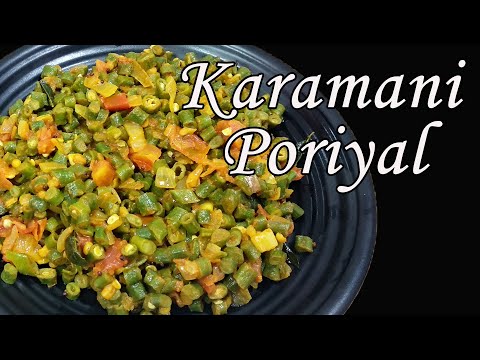
Karamani Kai Poriyal (Long Beans Stir Fry)

Authentic South Indian Food Creator · Home Chef
Rate this recipe
Karamani Kai Poriyal is a beloved South Indian stir fry made with tender long beans, known as karamani kai in Tamil. This simple yet flavourful dish is deeply rooted in Tamil Nadu's everyday home cooking tradition. Long beans are a common vegetable found in Tamil kitchens, especially during the summer and monsoon months when they grow abundantly in backyards and local markets. Seasoned with mustard seeds, curry leaves, and freshly grated coconut, this poriyal is the very soul of a traditional Tamil meal.
Tamil families absolutely love this poriyal because it brings comfort and nostalgia to the dining table. Mothers and grandmothers have been making this dish for generations, serving it alongside steaming hot rice, sambar, and rasam as a complete thali meal. It is a staple in everyday lunch boxes, weekend family meals, and even during auspicious occasions like Pongal, Tamil New Year, and temple feast days. The simplicity of the dish means it fits into busy weekday cooking without compromising on taste or nutrition.
What makes this recipe truly special is how few ingredients it takes to create such a satisfying dish. The key to the best karamani kai poriyal is chopping the beans finely and uniformly so they cook evenly and absorb all the spices beautifully. Always use fresh long beans for the best texture and colour. Adding freshly grated coconut at the end gives the poriyal a wonderful fragrance and authentic Tamil taste that no store-bought spice blend can replicate. This is a recipe you will return to again and again.
Looking for more curry recipes? Browse all vegetarian recipes →
Ingredients(12 items)
Instructions
💡 Tap a step to mark it doneWash the long beans thoroughly under running water. Trim both ends and finely chop them into small uniform pieces about 1 cm in length. Keeping the pieces uniform ensures even cooking throughout the dish.
Heat oil in a wide kadai or pan over medium flame. Once the oil is hot, add mustard seeds and let them splutter completely. This is the base of your tempering and releases a wonderful nutty aroma.
Add urad dal and chana dal to the spluttering mustard seeds. Stir and fry on medium flame until both dals turn golden and crispy. Be careful not to burn them as this adds a pleasant crunch to the poriyal.
Add the dry red chillies and curry leaves to the pan. Let them fry for about 20 seconds until the curry leaves crackle and become aromatic. The curry leaves are essential for authentic Tamil flavour.
Add the finely chopped onion and slit green chillies. Sauté on medium flame for 3 to 4 minutes until the onion turns soft and translucent. Stir regularly to prevent sticking.
Add the chopped long beans to the pan. Mix everything together well so the beans are coated evenly with the tempering. Sprinkle turmeric powder and salt over the beans and stir to combine.
Cover the pan with a lid and cook on low to medium flame for 8 to 10 minutes. Stir once or twice in between. The beans will cook in their own steam without needing any added water. They should be tender but still have a slight bite.
Remove the lid and check if the beans are cooked through. If there is any moisture remaining, increase the flame slightly and stir fry for another 2 minutes until it evaporates completely and the poriyal looks dry and well tossed.
Turn off the flame and add the freshly grated coconut. Mix gently so the coconut coats all the beans evenly. Adding coconut off the heat preserves its fresh flavour and sweet fragrance. Serve hot with rice and sambar.
Tips and Tricks
- Always chop the long beans into small, equal-sized pieces of about 1 cm so they cook evenly and have a consistent texture throughout the poriyal.
- Do not add water while cooking the beans. Covering the pan traps enough steam from the vegetables themselves to cook them perfectly without making the poriyal soggy.
- Always add the freshly grated coconut only after turning off the flame. Adding it while the pan is still hot can make the coconut lose its fresh aroma and dry out too quickly.
⚠️ Nutrition values could not be verified for this recipe. Please check manually.
Related Tags