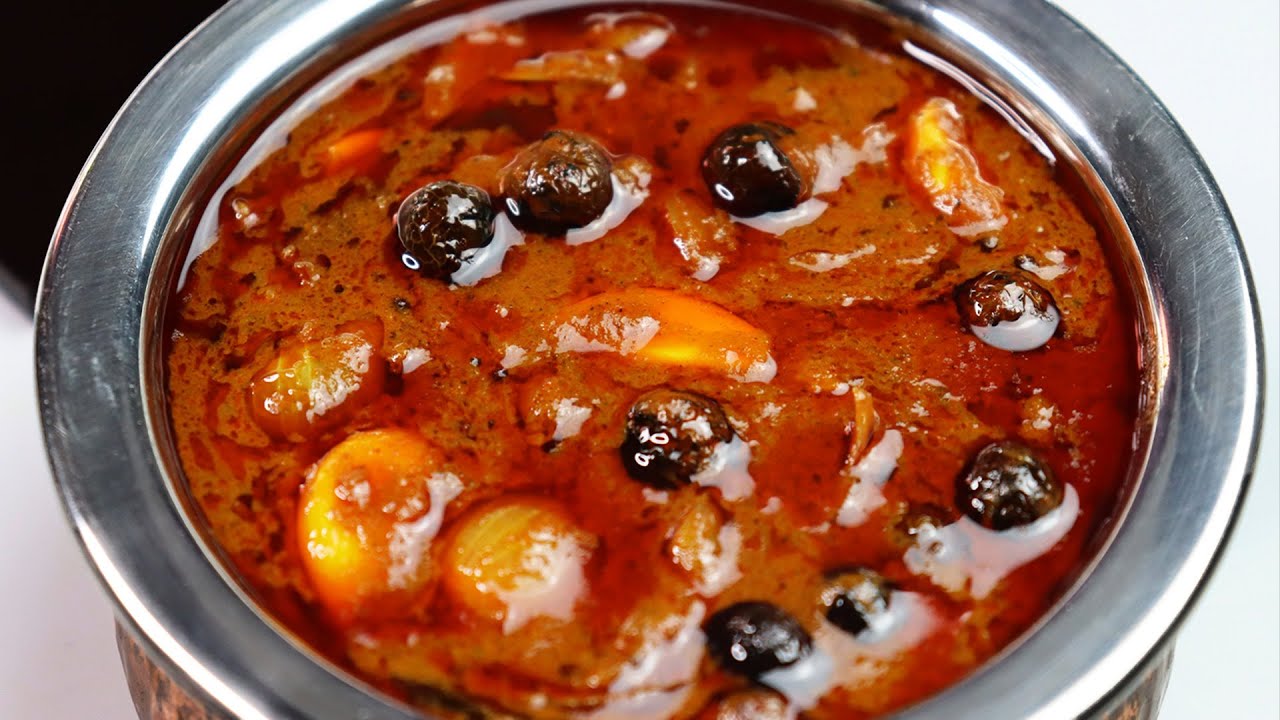
Karuvattu Kulambu | Dry Fish Curry

Authentic South Indian Food Creator · Home Chef

Rate this recipe
Karuvattu Kulambu, also known as Karuvadu Kulambu, is a bold and deeply aromatic dry fish curry that holds a cherished place in Tamil Nadu's traditional coastal cuisine. Made with sun-dried fish simmered in a tangy tamarind-based gravy enriched with freshly ground spices, this dish carries the essence of village kitchens passed down through generations. It is especially popular along the coastal districts of Tamil Nadu, where drying fish has been a centuries-old preservation technique embraced by fishing communities with great pride and love.
For Tamil families, Karuvattu Kulambu is far more than just a meal — it is a memory, a comfort, and a celebration of roots. Many families prepare this dish on lazy Sunday afternoons, pairing it with steaming hot rice and a generous pour of sesame oil. It is also a staple during simple family gatherings and festive home meals. The pungent aroma of dry fish hitting a hot pan instantly transports people back to their grandmother's kitchen, making it one of those deeply nostalgic recipes that Tamil families across the world continue to cherish and recreate with love.
What makes this Karuvattu Kulambu truly special is the beautiful balance of tangy tamarind, spicy red chillies, and the umami depth of dried fish that all come together in one rich, finger-licking gravy. For best results, always soak the dried fish thoroughly to remove excess salt, and use good quality sesame oil for authentic flavor. A small piece of jaggery added at the end rounds off the sourness perfectly. Patience while simmering the gravy is the real secret to a thick, flavorful kulambu.
Looking for more curry recipes? Browse all recipes →
Ingredients(17 items)
Instructions
💡 Tap a step to mark it doneSoak the dry fish in water for at least 20 to 30 minutes to remove excess salt. Rinse it 2 to 3 times under running water, drain completely, and set aside. This step is very important to control the saltiness of the final curry.
Soak the tamarind in 2 cups of warm water for 15 minutes. Squeeze it well with your hands to extract all the pulp, strain out the seeds and fiber, and keep the tamarind water ready to use.
Heat sesame oil in a heavy-bottomed kadai or clay pot over medium flame. Once the oil is hot, add mustard seeds and let them splutter. Then add fenugreek seeds and dried red chillies and fry for 20 seconds until aromatic. Do not burn the fenugreek as it will turn bitter.
Add the curry leaves and let them crackle in the oil. Now add the pearl onions and crushed garlic. Saute on medium heat for 5 to 6 minutes until the onions turn golden brown and the raw smell of garlic disappears completely.
Add the roughly chopped tomatoes to the pan. Cook on medium heat for 4 to 5 minutes, mashing them slightly as they soften, until the tomatoes become completely mushy and oil begins to separate from the mixture.
Reduce the flame to low. Add red chilli powder, coriander powder, turmeric powder, and black pepper powder. Stir everything together well and saute the spices with the onion-tomato base for 2 minutes so the raw smell of the powders cooks off fully.
Pour in the extracted tamarind water and stir well to combine everything. Increase the flame to medium-high and bring the gravy to a boil. Let it boil for 5 minutes, stirring occasionally.
Add the soaked and cleaned dry fish pieces into the boiling tamarind gravy. Gently stir without breaking the fish pieces. Reduce the flame to medium and cook the curry for 12 to 15 minutes, allowing the fish to absorb all the flavors of the gravy.
Taste the curry before adding salt, since the dry fish already contains natural salt. Add salt only if needed. Add the small piece of jaggery at this stage to balance the tanginess and bring harmony to all the flavors.
Continue simmering the kulambu on low flame for another 5 minutes until the gravy thickens to a rich, deep consistency and oil floats on the surface. This is the sign that your Karuvattu Kulambu is perfectly cooked. Serve hot with steamed rice and a drizzle of sesame oil on top.
Tips and Tricks
- Always soak the dry fish in water for at least 20 to 30 minutes and rinse it multiple times before cooking. This removes excess salt and any strong odor, making the final curry balanced and enjoyable.
- Sesame oil is non-negotiable in an authentic Karuvattu Kulambu. It adds a nutty depth and traditional flavor that no other oil can replicate. Never substitute it with refined oil for this recipe.
- Cooking this kulambu in a traditional clay pot (mann chatti) makes a huge difference in flavor. The earthen pot absorbs and distributes heat evenly, and the porous surface enhances the taste of the tamarind gravy beautifully.
Related Tags