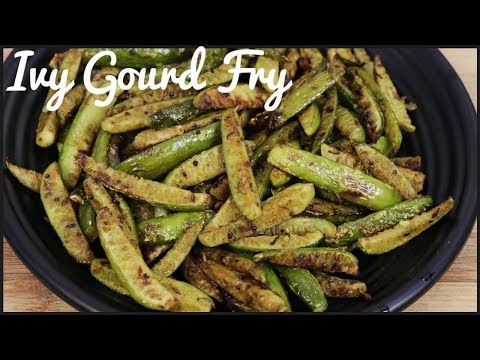
Kovakkai Poriyal | Ivy Gourd Stir Fry
Authentic South Indian Food Creator · Home Chef
Rate this recipe
Kovakkai Poriyal, also known as Ivy Gourd Stir Fry, is a beloved and humble side dish deeply rooted in Tamil Nadu's everyday home cooking. Kovakkai, or ivy gourd, is a small, bright green vegetable that grows abundantly across South India. This simple stir fry, tempered with mustard seeds, curry leaves, and red chillies, then tossed with freshly grated coconut, is a staple poriyal found in nearly every Tamil household. Its earthy flavor and satisfying crunch make it a perfect companion to steaming hot rice and sambar.
Tamil families absolutely adore Kovakkai Poriyal because it is quick, nutritious, and incredibly flavorful with minimal effort. It is a regular feature on the everyday lunch plate alongside rice, sambar, rasam, and kootu. Many grandmothers and mothers swear by this dish during summer months when kovakkai is in season and plentiful. It also holds a special place in traditional Tamil feast spreads during occasions like Karthigai Deepam, Aadi Perukku, and everyday temple prasadam meals, where simple vegetarian dishes are celebrated with great love and gratitude.
What makes this Kovakkai Poriyal truly special is how a few pantry staples can transform a humble vegetable into something absolutely delicious. The key to the best results lies in cutting the kovakkai into thin, even rounds so they cook uniformly and turn beautifully golden at the edges. Using a wide iron pan or kadai helps achieve that slight crispiness that makes this poriyal irresistible. Adding freshly grated coconut at the very end preserves its texture and aroma, giving the dish a classic Tamil touch that keeps everyone coming back for more.
Looking for more curry recipes? Browse all vegetarian recipes →
Ingredients(14 items)
Instructions
💡 Tap a step to mark it doneWash the kovakkai thoroughly under running water. Trim both ends and slice them into thin, even rounds approximately 3 to 4 mm thick. Keeping them uniform ensures even cooking and a slightly crisp texture. Set aside.
Heat a wide kadai or iron pan over medium flame. Add coconut oil or sesame oil and let it warm up. Once the oil is hot, add the mustard seeds and wait for them to splutter completely before proceeding.
Add the urad dal and chana dal to the pan. Stir continuously on medium heat until both dals turn golden brown. Be careful not to burn them as this forms the crunchy base of the tempering.
Add the broken dry red chillies and curry leaves to the pan. Fry for about 20 to 30 seconds until the curry leaves turn crisp and aromatic. Then add a small pinch of asafoetida and stir quickly.
Add the finely chopped onion to the tempering. Sauté on medium heat for 4 to 5 minutes until the onions turn soft and lightly golden. Stir occasionally to ensure even cooking without burning.
Add the sliced kovakkai to the pan. Mix everything well so the kovakkai is coated with the tempering and onion mixture. Spread it out evenly in the pan for better contact with the heat.
Add turmeric powder, red chilli powder, coriander powder, and salt. Mix well to coat all the kovakkai slices evenly with the spices. Sprinkle a tablespoon of water if needed to help the spices blend without burning.
Cover the pan with a lid and cook on low to medium heat for 8 to 10 minutes, stirring once or twice in between. The kovakkai should become tender and cooked through. Remove the lid and cook for another 2 to 3 minutes to dry out any excess moisture.
Once the kovakkai is fully cooked and slightly golden at the edges, add the freshly grated coconut. Stir gently to mix the coconut into the poriyal without mashing the vegetables. Cook for just 1 minute on low flame to warm through the coconut.
Turn off the heat and transfer the Kovakkai Poriyal to a serving bowl. Serve hot as a side dish with steamed rice, sambar, and rasam for a wholesome traditional Tamil meal.
Tips and Tricks
- Always slice the kovakkai into thin, uniform rounds for even cooking. If the slices are too thick, the vegetable will remain hard in the centre while the outside overcooks.
- Do not add too much water while cooking kovakkai. This vegetable releases a little moisture on its own, and excess water makes the poriyal soggy instead of giving it the desired slightly crisp texture.
- Add the freshly grated coconut only at the very end and cook it for just a minute. Adding coconut too early dries it out and removes its natural sweetness and soft texture that makes Tamil poriyal so special.
⚠️ Nutrition values could not be verified for this recipe. Please check manually.
Related Tags