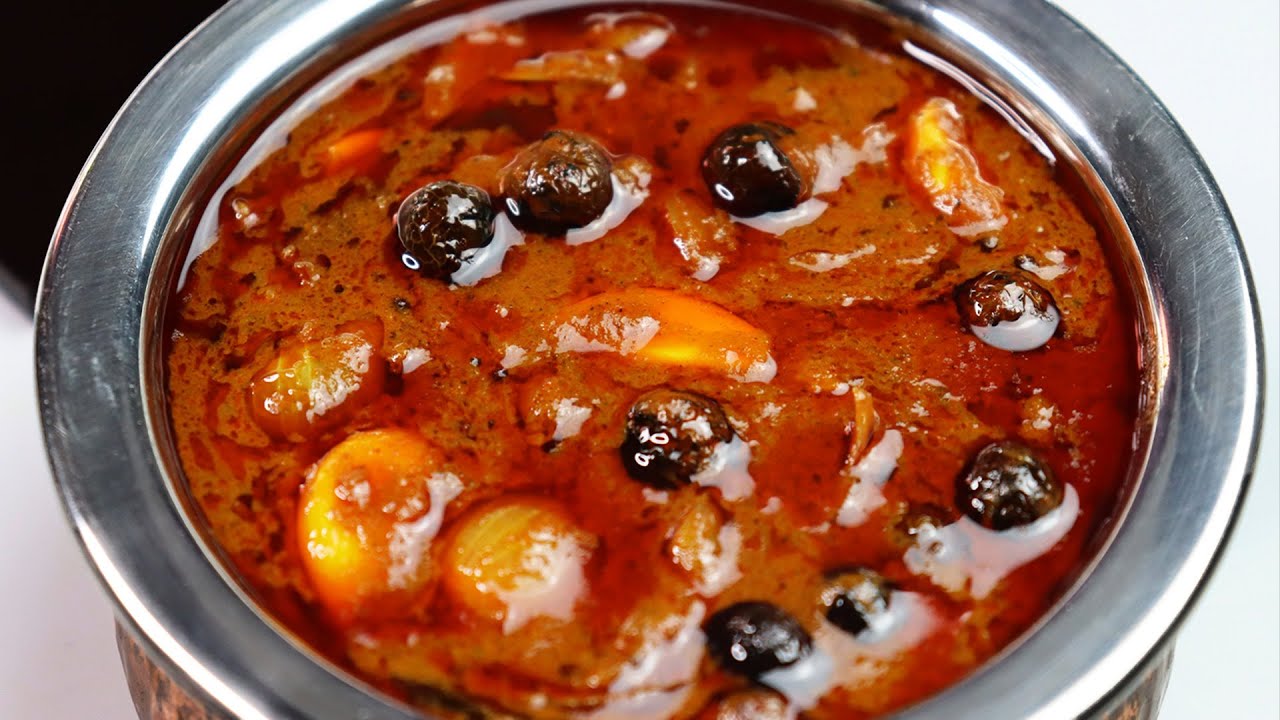
Pavakkai Puli Kuzhambu (Bitter Gourd Tamarind Curry)

Authentic South Indian Food Creator · Home Chef

Rate this recipe
Pavakkai Puli Kuzhambu is a classic South Indian tamarind-based curry made with bitter gourd, known as pavakkai in Tamil. This dish is deeply rooted in Tamil Brahmin and Chettinad cooking traditions, where tangy tamarind, aromatic spices, and fresh curry leaves come together to create a bold, flavourful gravy. The bitterness of the gourd beautifully balances the sourness of tamarind and the warmth of spices, making it a uniquely satisfying dish that has been enjoyed in Tamil households for generations.
Tamil families absolutely love this kuzhambu because it pairs perfectly with steamed white rice and a drizzle of sesame oil on a quiet weekday lunch. Many households prepare pavakkai kuzhambu on auspicious days and during festivals like Karthigai Deepam, Aadi Perukku, and Varalakshmi Vratham, as bitter gourd is considered a purifying and medicinal vegetable. Grandmothers often swear by this recipe as a remedy during seasonal changes, and it holds a warm, nostalgic place in every Tamil family's memory.
What makes this recipe truly special is the technique of salting the bitter gourd pieces first to draw out excess bitterness before cooking, ensuring a milder and more enjoyable flavour without losing the vegetable's natural goodness. Using freshly extracted tamarind pulp and a generous tempering of mustard seeds, dried red chillies, and curry leaves in sesame oil creates an authentic, restaurant-quality kuzhambu right in your own kitchen. Follow these simple steps and serve it hot with rice for a wholesome, soul-warming Tamil meal.
Looking for more curry recipes? Browse all vegetarian recipes →
Ingredients(19 items)
Instructions
💡 Tap a step to mark it doneWash the bitter gourd thoroughly and slice them into thin rounds, about half a centimetre thick. Remove seeds if they are large and tough. Place the slices in a bowl, sprinkle one teaspoon of salt over them, mix well, and set aside for 15 minutes. This salting process draws out much of the bitterness. After 15 minutes, squeeze the slices gently with your hands and rinse them under running water. Drain completely and set aside.
Soak the tamarind in 1.5 cups of warm water for 10 to 15 minutes. Once softened, squeeze the tamarind with your fingers to extract all the pulp into the water. Strain through a sieve to remove seeds and fibres, and keep the smooth tamarind extract ready. This freshly extracted tamarind water gives the kuzhambu its authentic tangy flavour.
Heat sesame oil in a heavy-bottomed kadai or pan over medium flame. Sesame oil is traditional and adds a distinct nutty flavour that makes this kuzhambu authentic. Once the oil is hot, add mustard seeds and let them splutter completely. Then add cumin seeds, dried red chillies, asafoetida, and curry leaves. Let everything sizzle for about 30 seconds until fragrant.
Add the crushed garlic cloves to the tempering and sauté for one minute until they turn lightly golden and aromatic. Then add the finely chopped onions and cook on medium flame, stirring occasionally, for about 5 to 6 minutes until they turn soft and golden brown. This step builds the base flavour of the kuzhambu, so do not rush it.
Add the chopped tomatoes to the pan and cook for 3 to 4 minutes until they become mushy and the oil begins to separate from the mixture. Now add turmeric powder, red chilli powder, coriander powder, and sambar powder. Mix everything together well and cook the spices with the tomato-onion mixture for another 2 minutes on low flame to remove the raw smell of the spices.
Add the pre-treated bitter gourd slices to the pan and mix well to coat them with the spice mixture. Sauté the bitter gourd on medium flame for 4 to 5 minutes, stirring occasionally, until they are lightly cooked and well coated with the masala. This step helps the bitter gourd absorb the spices before the tamarind water is added.
Pour the freshly extracted tamarind water into the pan. Add salt to taste and mix everything together. Increase the flame to medium-high and bring the kuzhambu to a boil. Once it starts boiling, reduce the flame to medium-low and let it simmer uncovered for 12 to 15 minutes, stirring occasionally, until the gravy thickens and the raw tamarind smell disappears completely.
Add a small piece of jaggery to the simmering kuzhambu and stir well. The jaggery balances the sourness of the tamarind and softens the bitterness of the pavakkai, bringing all the flavours into perfect harmony. Taste and adjust salt, spice, or tamarind at this point according to your preference. Let it simmer for another 2 minutes.
Once the kuzhambu has reached a thick, glossy consistency and the oil floats on top, switch off the flame. This floating oil is a sign that the kuzhambu is perfectly cooked. Transfer to a serving bowl and garnish with a few fresh curry leaves. Serve hot with steamed white rice, a drizzle of sesame oil, and papad or stir-fried vegetables on the side for a complete Tamil meal.
Tips and Tricks
- Always salt the bitter gourd slices and let them rest for at least 15 minutes before rinsing. This simple step removes most of the harsh bitterness and makes the kuzhambu enjoyable even for people who normally dislike bitter gourd.
- Use only sesame oil (nallennai) for this kuzhambu. It is traditionally used in Tamil puli kuzhambu recipes and gives an authentic nutty depth of flavour that regular cooking oil simply cannot replicate.
- To intensify the flavour and allow the bitter gourd to fully absorb all the tamarind and spices, prepare this kuzhambu a few hours ahead of serving time or even the day before. Like most tamarind-based curries, Pavakkai Puli Kuzhambu tastes even better the next day.
⚠️ Nutrition values could not be verified for this recipe. Please check manually.
Related Tags