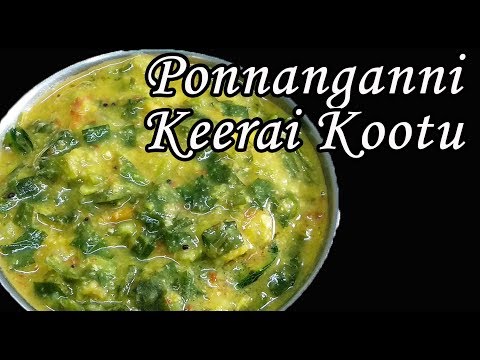
Ponnanganni Keerai Kootu

Authentic South Indian Food Creator · Home Chef
Rate this recipe
Ponnanganni Keerai Kootu is a cherished South Indian dish made with dwarf copperleaf greens, a beloved leafy green that has been part of Tamil cooking for centuries. This kootu combines tender ponnanganni leaves with cooked moong dal, onion, tomato, and a fragrant coconut-spice blend to create a thick, hearty side dish. Rooted deeply in Tamil Nadu's home kitchen tradition, this dish reflects the Tamil love for nutritious greens cooked simply yet beautifully with everyday pantry ingredients.
Tamil families across generations have treasured ponnanganni keerai for its remarkable health benefits, particularly for eyesight and skin health. Mothers and grandmothers make this kootu regularly during weekday lunches, serving it warm alongside steamed rice and a drizzle of sesame oil. It is also a popular side dish during simple home gatherings and auspicious days when vegetarian meals are preferred. The comforting aroma of mustard seeds crackling in oil and garlic sizzling in the pan brings an unmistakable feeling of home and love.
What makes this recipe truly special is the creamy, velvety consistency that moong dal lends to the kootu. The dal blends beautifully with the soft greens, creating a dish that is neither too dry nor too watery. For best results, do not overcook the greens — add them at the right moment to preserve their vibrant color and nutrients. Use fresh coconut in the ground masala for an authentic Tamil flavor. This is an effortless recipe that even beginner cooks can master on their very first try.
Looking for more curry recipes? Browse all vegetarian recipes →
Ingredients(15 items)
Instructions
💡 Tap a step to mark it doneRinse the moong dal thoroughly under running water. Place it in a small pressure cooker or saucepan with 1/2 cup of water and cook until soft and mushy. If using a pressure cooker, cook for 2 whistles on medium heat. Set the cooked dal aside.
Prepare the coconut masala by adding grated fresh coconut, cumin seeds, and one dry red chilli to a blender. Add 2 to 3 tablespoons of water and grind to a smooth, fine paste. Keep this coconut paste aside for later use.
Heat oil in a wide kadai or pan over medium heat. Once the oil is hot, add mustard seeds and let them splutter. Then add urad dal and let it turn golden. Add curry leaves and the remaining dry red chilli, and sauté for a few seconds until fragrant.
Add the garlic cloves to the kadai and sauté for one to two minutes until they turn lightly golden and release their aroma. Then add the finely chopped onion and sauté on medium heat for three to four minutes until the onion becomes soft and translucent.
Add the chopped tomato to the pan along with turmeric powder and a pinch of salt. Mix well and cook for two to three minutes until the tomato softens and the raw smell disappears and the mixture comes together nicely.
Add the cleaned and chopped ponnanganni keerai to the pan. Mix gently with the onion-tomato base. Sprinkle a little water, cover the pan with a lid, and cook on low to medium heat for four to five minutes until the greens wilt and become tender.
Once the greens are cooked, add the cooked moong dal to the pan and mix everything together. Stir gently so the dal coats the greens evenly. If the mixture looks too thick, add a small splash of water to adjust the consistency.
Add the ground coconut-cumin paste to the kootu and mix well. Cook on low heat for three to four minutes, stirring occasionally, so the coconut masala blends into the dish and the raw smell of coconut is completely cooked out.
Taste and adjust salt as needed. Let the kootu simmer for one more minute on low heat until it reaches a thick, creamy consistency. Turn off the heat. Serve hot with steamed rice and a drizzle of sesame oil, or as a side dish with chapathi or roti.
Tips and Tricks
- Do not overcook the ponnanganni keerai — add it after the onion and tomato are well sautéed and cook only until just wilted to preserve its bright green color and nutritional value.
- Always use freshly grated coconut for the ground masala to get the authentic Tamil kootu flavor. Desiccated coconut will not give the same creamy and fragrant result.
- For extra richness and a traditional touch, add a small teaspoon of coconut oil at the very end just before serving — it elevates the aroma and gives the kootu a beautiful finishing flavor.
⚠️ Nutrition values could not be verified for this recipe. Please check manually.
Related Tags