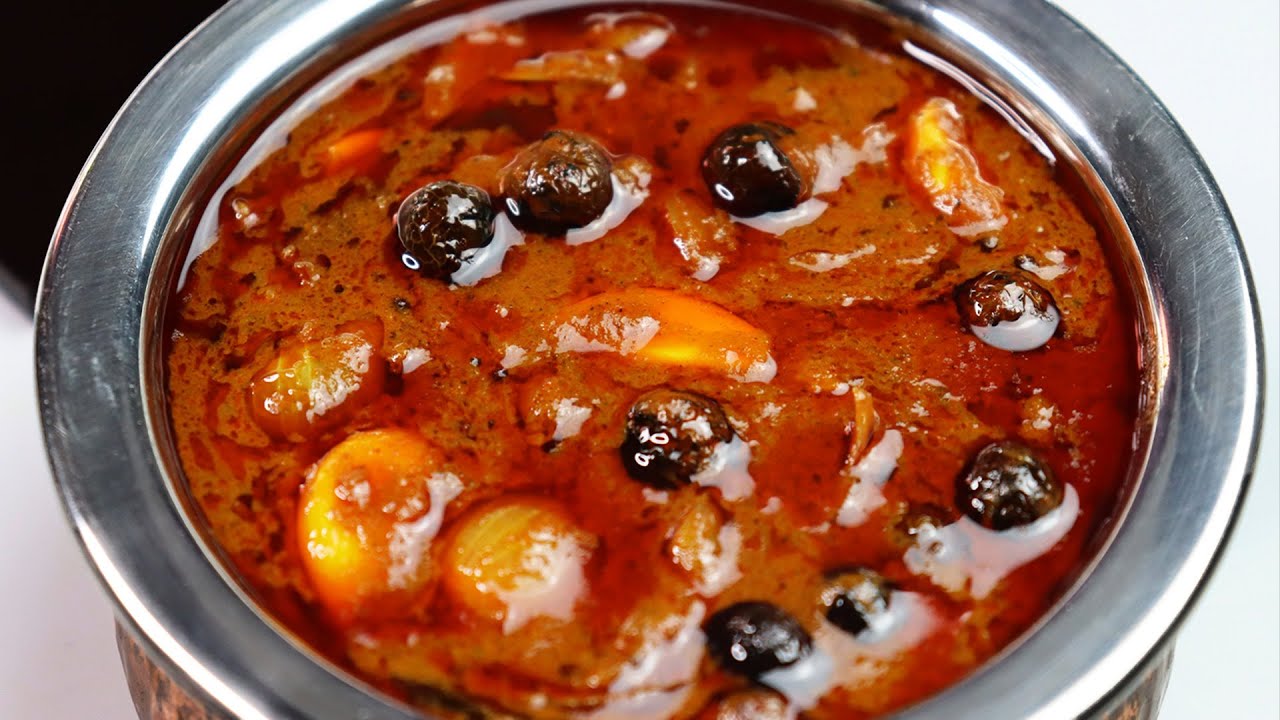
Poondu Kulambu (Garlic Kulambu)

Authentic South Indian Food Creator · Home Chef

Rate this recipe
Poondu Kulambu is a deeply flavourful, tangy South Indian tamarind-based curry infused with the bold and earthy punch of whole garlic cloves. Originating from Tamil Nadu's rich culinary tradition, this kulambu is a staple in many Tamil households, passed down through generations. It belongs to the beloved family of kuzhambu recipes that use tamarind, tomatoes, and aromatic spices to create a thick, soul-satisfying gravy that pairs perfectly with steaming hot rice and a dollop of sesame oil.
Tamil families absolutely adore Poondu Kulambu for its incredible shelf life and deep, rustic flavour that actually improves over time. It is a go-to dish for busy weekdays, and many mothers lovingly pack this kulambu for their children heading to hostels or office. Unlike many curries, this one stays fresh for up to a week without refrigeration, making it the perfect companion for bachelors, hostel students, and working professionals who crave a taste of home in every meal.
What makes this recipe truly special is how garlic transforms beautifully when slow-cooked in tamarind gravy — the sharpness mellows and the cloves become tender, almost sweet, absorbing all the spices around them. The secret to the best Poondu Kulambu lies in using sesame oil generously and allowing the kulambu to simmer on low flame until it thickens to a rich, glossy consistency. Always use fresh tamarind for authentic tang, and do not rush the cooking process — patience is the true ingredient here.
Looking for more curry recipes? Browse all vegetarian recipes →
Ingredients(17 items)
Instructions
💡 Tap a step to mark it doneSoak the tamarind in 2 cups of warm water for 10 to 15 minutes. Once softened, squeeze the tamarind well using your hands to extract all the pulp. Strain through a sieve to remove seeds and fibre and set the tamarind water aside. This forms the base of your kulambu, so make sure the extraction is thorough.
Heat 4 tablespoons of sesame oil in a heavy-bottomed kadai or thick pan over medium flame. Sesame oil is essential for authentic flavour and helps preserve the kulambu longer. Once the oil is hot, add mustard seeds and let them splutter completely. Then add cumin seeds, dry red chillies, and fresh curry leaves. Let them sizzle and become aromatic for about 30 seconds.
Add the peeled small onions (shallots) to the pan. Fry them on medium flame, stirring occasionally, until they turn golden brown and slightly caramelised. This should take about 6 to 8 minutes. The sweetness of the shallots forms a beautiful base for the kulambu.
Add all the peeled garlic cloves to the pan. Sauté them together with the onions for 4 to 5 minutes, stirring well, until the garlic turns lightly golden on the outside. Do not let them burn. The garlic will soften further as the kulambu cooks, so you just need a light sear at this stage.
Add the chopped tomatoes to the pan. Mix everything well and cook on medium flame until the tomatoes become completely soft and mushy, and the oil starts to separate from the sides. This will take about 5 to 6 minutes. Mash the tomatoes lightly with the back of your spoon as they cook.
Now add turmeric powder, red chilli powder, coriander powder, black pepper powder, and cumin powder. Mix all the spices in well with the onion, garlic, and tomato mixture. Fry the masala on medium-low flame for 2 to 3 minutes, stirring continuously, until the raw smell of the spices disappears and the oil separates again.
Pour in the extracted tamarind water into the pan. Stir everything together well. Add salt to taste and mix. Bring the kulambu to a boil on medium-high flame, then reduce the flame to medium-low. Allow it to simmer uncovered, stirring occasionally, so the raw tamarind smell cooks off completely.
Let the kulambu cook on a low to medium flame for 15 to 20 minutes, stirring every few minutes to prevent it from sticking to the bottom. The gravy will gradually thicken, deepen in colour, and become glossy. The garlic cloves will soften and absorb the flavours beautifully during this time.
Once the kulambu has thickened to a rich, semi-thick consistency and the oil floats on top, add a small piece of jaggery. This balances the tanginess of the tamarind and rounds off the flavour beautifully. Stir well and cook for one more minute. Taste and adjust salt, spice, or tamarind as needed.
Switch off the flame. Drizzle a little extra sesame oil on top for added richness and fragrance. Your Poondu Kulambu is now ready. Serve hot with steamed white rice, a side of papad, and a few drops of sesame oil mixed into the rice. This kulambu tastes even better the next day as the flavours develop further.
Tips and Tricks
- Always use sesame oil (gingelly oil) for authentic Poondu Kulambu — it adds a unique nutty flavour and acts as a natural preservative, helping the kulambu stay fresh for up to a week at room temperature.
- Do not chop or crush the garlic cloves — keep them whole throughout the cooking process. Whole garlic cloves slow-cook beautifully in the tamarind gravy, turning soft and mildly sweet, and become the highlight of every bite.
- For a thicker, more concentrated kulambu that lasts longer without spoiling, simmer the gravy on low flame until the oil visibly separates and floats on the surface. This oil layer acts as a seal and is a sign your kulambu is perfectly cooked and shelf-stable.
Related Tags