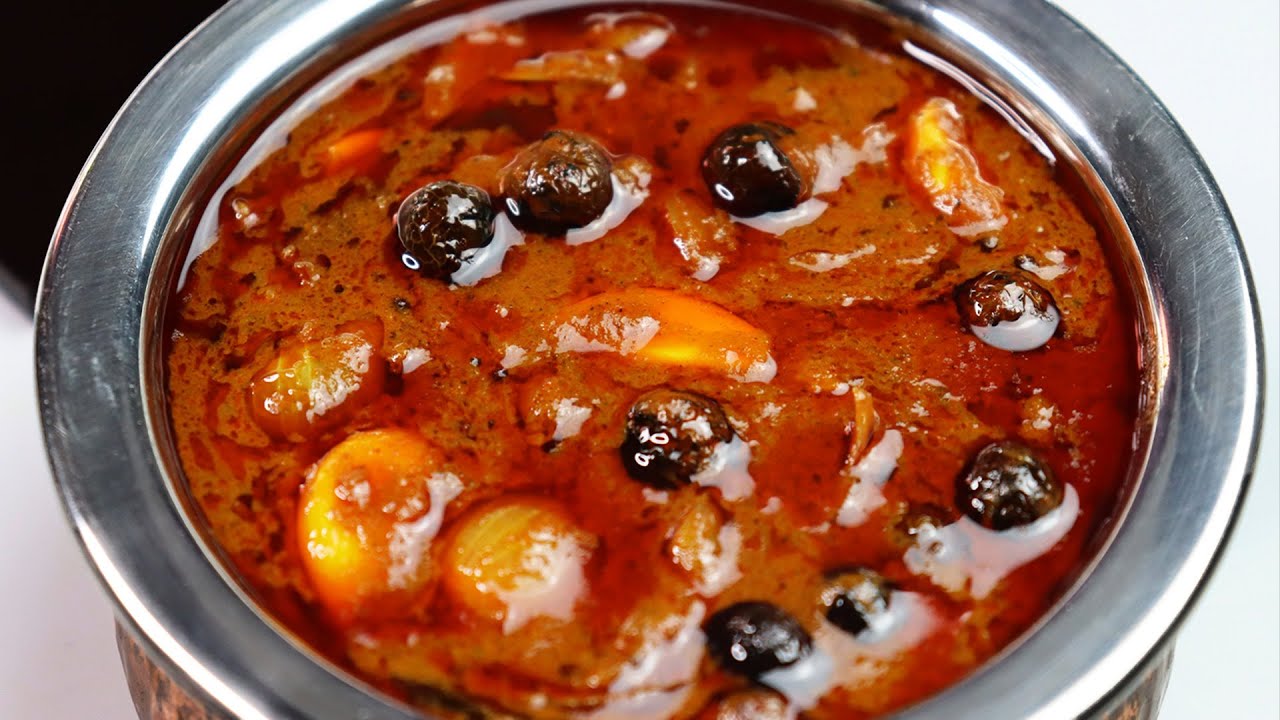
Sundakkai Kara Kuzhambu | Turkey Berry Spicy Tamarind Curry

Authentic South Indian Food Creator · Home Chef

Rate this recipe
Sundakkai Kara Kuzhambu is a bold, fiery tamarind-based curry made with fresh turkey berries, a beloved ingredient deeply rooted in Tamil Nadu's culinary heritage. Known as sundakkai in Tamil, these small green berries have been used in South Indian kitchens for centuries, prized not just for their unique bitter-tangy flavor but also for their remarkable medicinal properties. This rustic kuzhambu is a staple in traditional Tamil households, especially in villages and small towns where sundakkai grows abundantly in backyards and farmlands.
Tamil families absolutely adore Sundakkai Kara Kuzhambu for its deeply comforting, soul-warming taste that pairs perfectly with hot steamed rice and a generous drizzle of sesame oil. This dish is often made on weekday afternoons when families want something hearty, wholesome, and simple. It holds a special place in Tamil kitchens during the Karthigai Deepam season and rainy days when warming, spiced foods are most welcome. Grandmothers and mothers pass down this recipe through generations, making it a true heirloom dish full of love and tradition.
What makes this recipe truly special is the combination of freshly roasted spices, tangy tamarind, and the slightly bitter bite of sundakkai that creates a flavor profile unlike any other kuzhambu. The key to the best results is to lightly crush the turkey berries before cooking so they absorb all the spiced tamarind gravy deeply. Using gingelly oil instead of regular oil adds an authentic nutty aroma that elevates this dish to restaurant-quality comfort food right in your own kitchen.
Looking for more curry recipes? Browse all vegetarian recipes →
Ingredients(17 items)
Instructions
💡 Tap a step to mark it doneSoak the tamarind in 1 cup of warm water for 15 minutes. Once softened, squeeze and extract the juice thoroughly. Strain to remove any seeds or fiber and set aside the tamarind water.
Wash the fresh turkey berries (sundakkai) well under running water. Using the back of a ladle or your palm, lightly crush each berry just enough to crack it open slightly. This helps the berries absorb the spiced gravy and reduces their bitterness. Do not mash them completely.
Heat a heavy-bottomed kadai or clay pot over medium flame. Add gingelly oil and let it heat until shimmery. Add mustard seeds and let them splutter fully. Then add cumin seeds, dried red chilies, and curry leaves. Let them sizzle and become aromatic for about 30 seconds.
Add the peeled pearl onions (shallots) to the kadai and sauté on medium heat until they turn golden brown and slightly caramelized, about 5 to 6 minutes. Then add the crushed garlic cloves and sauté for another 2 minutes until the raw smell disappears completely.
Add the finely chopped tomato and cook until it becomes completely soft and mushy and the oil begins to separate from the mixture, about 3 to 4 minutes. This tomato base adds body and a gentle tang to the kuzhambu.
Add the lightly crushed sundakkai berries to the pan. Mix well and sauté on medium heat for 3 to 4 minutes so the berries get a light roast and absorb the flavors of the onion and tomato base.
Now add turmeric powder, red chili powder, coriander powder, and black pepper powder. Mix everything together thoroughly and cook the spice powders on low heat for 2 minutes, stirring constantly to prevent burning and to cook out the raw spice taste.
Pour in the extracted tamarind water and add the remaining 1 to 1.5 cups of plain water. Stir well to combine everything. Add salt and the small piece of jaggery if using. Bring the kuzhambu to a rolling boil on high heat.
Once boiling, reduce the flame to medium-low and let the kuzhambu simmer uncovered for 15 to 18 minutes, stirring occasionally. The gravy will thicken, the oil will float on top, and the sundakkai berries will become tender and fully cooked. This is the sign your kuzhambu is ready.
Check seasoning and adjust salt or tamarind if needed. Turn off the heat and let the kuzhambu rest for 5 minutes before serving. Serve hot with steamed white rice, a drizzle of extra gingelly oil, and papad on the side for a complete traditional Tamil meal.
Tips and Tricks
- Always use gingelly oil (sesame oil) for authentic flavor in this kuzhambu. Regular cooking oil will not give you the same depth of aroma and traditional taste that Tamil households love.
- Lightly crushing the sundakkai berries before cooking is the most important step. It reduces the natural bitterness of the berries and allows the tamarind and spice gravy to seep inside each berry, making every bite flavorful.
- For a thicker and richer kuzhambu, let it simmer longer on low flame until the oil separates clearly and floats on the surface. This stage, called 'pakkuvam', is when the kuzhambu tastes the best. It also keeps well for 2 to 3 days in the refrigerator and tastes even better the next day.
Related Tags